Ruger American rifle guide: calibers for deer and elk
The Ruger American is the rifle that made accurate bolt guns cheap. Since 2011 it has sold in the hundreds of thousands on a simple formula: a hammer-forged barrel, a three-lug bolt with a short throw, an adjustable trigger and a bedding system that shoots better than its price suggests. The Generation II rifles updated the stock and barrel in 2023. This guide explains the versions and, more usefully, which caliber to buy for the game you hunt. It is drawn from Ruger's published specifications and owner experience; we are an independent store, not affiliated with Sturm, Ruger and Co. Rifles ship to your licensed dealer; buyers must be 18.
The versions
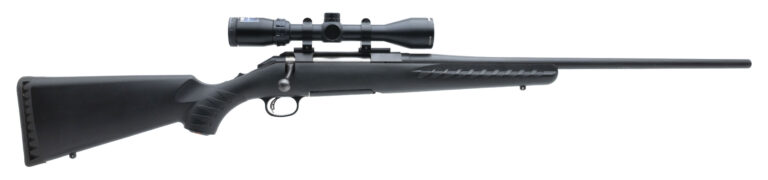
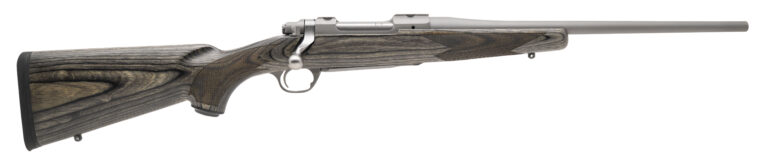
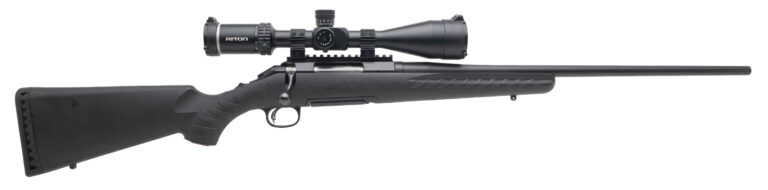
- American Standard: the original 22-inch sporter barrel and black synthetic stock. The all-round deer rifle.
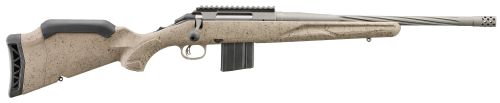
- American Predator: a heavier, threaded 18- to 22-inch barrel, a green stock and a factory rail; aimed at coyotes and long shots but popular for deer.
- American Ranch: a short 16- to 18-inch threaded barrel in cartridges such as .300 Blackout, 7.62x39 and .450 Bushmaster; a compact truck gun and a straight-wall deer rifle.
- American Hunter: a Magpul stock, a heavier barrel and a muzzle brake, for hunters who want a chassis feel.
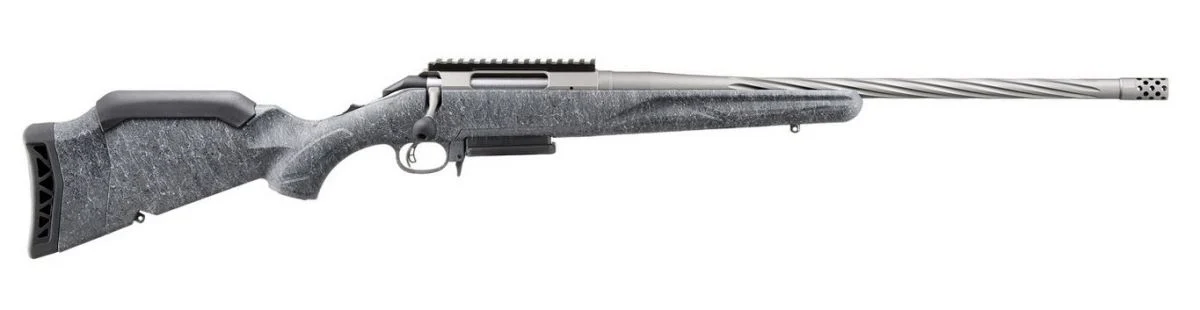
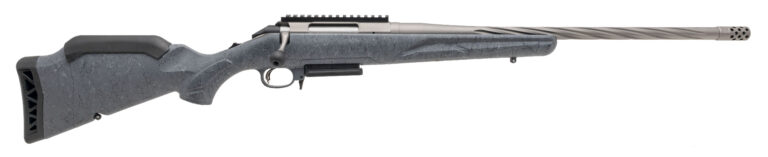
- American Generation II: the 2023 update with a splatter-finish stock that adjusts for comb height and length of pull, a spiral-fluted bolt, a threaded barrel with a brake, and a rail. Most new production is Gen II.
- American Rimfire: the .22 LR, .22 WMR and .17 HMR version, with the same trigger and stock modules; a fine trainer for the centerfire.
Common features
The Marksman adjustable trigger sets between about 3 and 5 pounds with a screw. The bolt has three lugs and a 70-degree lift that clears a scope. Power Bedding uses steel blocks in the stock to lock the action in place, which is why the rifle groups well. Magazines are detachable rotary or box magazines depending on cartridge, usually three to five rounds. Barrels are cold hammer-forged.
Whitetail deer: the short-action choices
For whitetail inside 300 yards, which describes most deer hunting in the eastern half of the country, the standard picks are .243 Winchester (light recoil, ideal for smaller shooters), 6.5 Creedmoor (flat-shooting, mild, ammunition everywhere), 7mm-08 Remington (a little more bullet than the 6.5 with similar recoil) and .308 Winchester (the most versatile, heaviest recoil of the four). The American in .308 is the default answer for a hunter who wants one rifle for deer, hogs and black bear.
Mule deer and open country
Western mule deer can mean 400-yard shots across a canyon. 6.5 Creedmoor, .270 Winchester, 6.5 PRC and .30-06 Springfield all reach that far with enough energy; the 6.5 PRC in a Gen II is the modern choice for long shots with manageable recoil, and the .270 is the classic. Choose a 22- or 24-inch barrel for velocity.
Elk
Elk are big and often shot at distance. .30-06 Springfield, .300 Winchester Magnum, 7mm Remington Magnum and 6.5 PRC with heavy bonded bullets are the standard elk cartridges, and the American is offered in all of them. The .300 Win Mag kicks; the Gen II's brake helps, at the cost of noise. Many experienced elk hunters carry a .30-06 or a 7mm Rem Mag and never feel under-gunned. .308 with a 165- to 180-grain premium bullet works for elk inside 300 yards for a careful shooter.
Straight-wall states
Ohio, Indiana, Iowa, Michigan's southern zone and parts of other states restrict deer rifles to straight-wall cartridges. The American Ranch in .450 Bushmaster and the Gen II in .350 Legend and .400 Legend are built for exactly that; the .350 Legend is the mild-recoiling choice, the .450 the heavier hitter. Check your state's current regulations for what is legal.
Barrels, threads and brakes
Gen II rifles ship threaded with a radial brake; hunters who dislike the blast can swap it for a thread protector or a suppressor where legal. Barrel length trades velocity against handiness: 22 inches is the compromise, 24 for magnums, 16 to 18 for the Ranch and for thick cover.
Optics
A 3-9x40 or 4-12x44 scope in the $200 to $500 range is the sensible match for a rifle at this price; a Gen II rail takes standard rings. Spend on glass before you spend on anything else, and get the rifle zeroed with the hunting load at 100 yards, then check at 200.
Magazines
Rotary magazines on most short-action versions, AICS-pattern box magazines on the Predator and Hunter, and Gen II uses AI-style magazines on many cartridges. Buy one spare. Magazine capacity is not a hunting concern, but a few states cap rifle capacity for hunting; follow your regulations.
Reliability and accuracy, as reported
The American's reputation is for sub-1.5-inch groups at 100 yards with factory ammunition and often better, at a price that undercuts most competitors. Owner complaints are minor: the plastic magazines on early rifles, the slick original stock (fixed on Gen II), and a bolt that is smooth but not silky. Ruger's service is well regarded.
The decision in short
- Eastern whitetail: .243, 6.5 Creedmoor, 7mm-08 or .308, Standard or Gen II.
- Mule deer and antelope: 6.5 Creedmoor, .270 or 6.5 PRC, Gen II.
- Elk: .30-06, 7mm Rem Mag, .300 Win Mag or 6.5 PRC with heavy bullets.
- Straight-wall states: .350 Legend or .450 Bushmaster.
- Trainer and small game: American Rimfire, or a 10/22.
Rifles ship to your dealer for buyers 18 and older; the state-by-state guide covers the transfer. Search Ruger American for stock and prices, or browse bolt-action rifles.
General information, not legal advice. Current as of September 2026. Laws change; check the official source before you act.